Roof leak repair in Monroe Township, NJ -- starting with the question the rest of this market skips, which is whether the roof is actually yours to pay for.
Most leak repairs run $350 to $1,800, but in this township a question comes first: is the roof yours? Outside the communities, yes, and the ordinary rules apply. Inside Clearbrook, Concordia or Rossmoor it is generally a common element the association maintains and replaces, and paying privately means paying for it twice.
Most roof leak repairs in this market land between $350 and $1,800, with genuinely minor work from about $150. The spread is wide because it covers two different jobs: putting right a failure you can see, and finding one you cannot.


Most leak repairs land between $350 and $1,800, with genuinely minor work from about $150. In this township there is a question ahead of the price, though: inside the age-restricted communities the roof is generally a common element the association maintains, and a private repair to one is money spent on somebody else's obligation. The largest single factor in this township is not on the roof at all -- it is whether the property sits inside one of the age-restricted communities. Outside them, ordinary New Jersey pricing applies. Inside them, the work is very often not an individual owner's to buy.
A visible, bounded failure on an accessible private roof -- a lifted course, a split pipe boot, a length of flashing. Diagnosed from the roof in minutes and fixed the same day.
A leak that has already been patched. Tracing water tracking along a rafter takes time in the roof space, and on a shared roof plane it can mean surveying well beyond the unit the water is showing in.
Finding out it is not your roof. That conversation costs nothing and happens on the phone, which is why it is the first thing we ask rather than something discovered after a visit.
Where this work normally leads, and what that costs.
Water coming through tonight gets covered tonight, whoever owns the roof.
The stain is not the hole.
A leak on a low-slope roof is almost never the membrane failing in open field.
A skylight that appears to leak is usually a failed flashing curb or condensation -- much less often the unit itself.
In a good part of this township the answer is 'not yours', the date is already scheduled, and you have been paying for it through the monthly assessment.
Outside the communities, a roof is an ordinary private roof and everything below applies to you. Inside Clearbrook, Concordia or Rossmoor, the roof is generally a COMMON ELEMENT the association is obligated to maintain and replace -- not something an owner commissions, and under most governing documents not something an owner is permitted to commission.
Under N.J.S.A. 45:22A-44.2 an association holding more than $25,000 of common capital assets must commission one: an analysis of the condition of the common building components it maintains and what replacing them will cost, done by a credentialed reserve specialist or a licensed engineer or architect. Any association that had not done one since January 2019 had to by January 2025, so it is probably recent.
An association cannot schedule a repair to something nobody has reported, and a verbal report to a gate house is not a record. This is where an independent survey earns its keep: a photographed written finding is much harder to set aside than a phone call from a resident.
And apply the ordinary tests. Over $500 New Jersey requires the contract in writing and signed, with the legal business name and address on it, and carrying a bold notice giving you three business days to cancel.
Free inspection, and an honest answer about whose roof it is before any price.
Tell us the address and whether the property is inside one of the communities. That single answer decides whether this is a job we can quote you for at all, and it is much better established on the phone than after somebody has been out.
An active leak gets temporary cover regardless of who owns the roof. Nobody sensible reads governing documents under a wet ceiling, and nothing about making a building watertight commits you to anything.
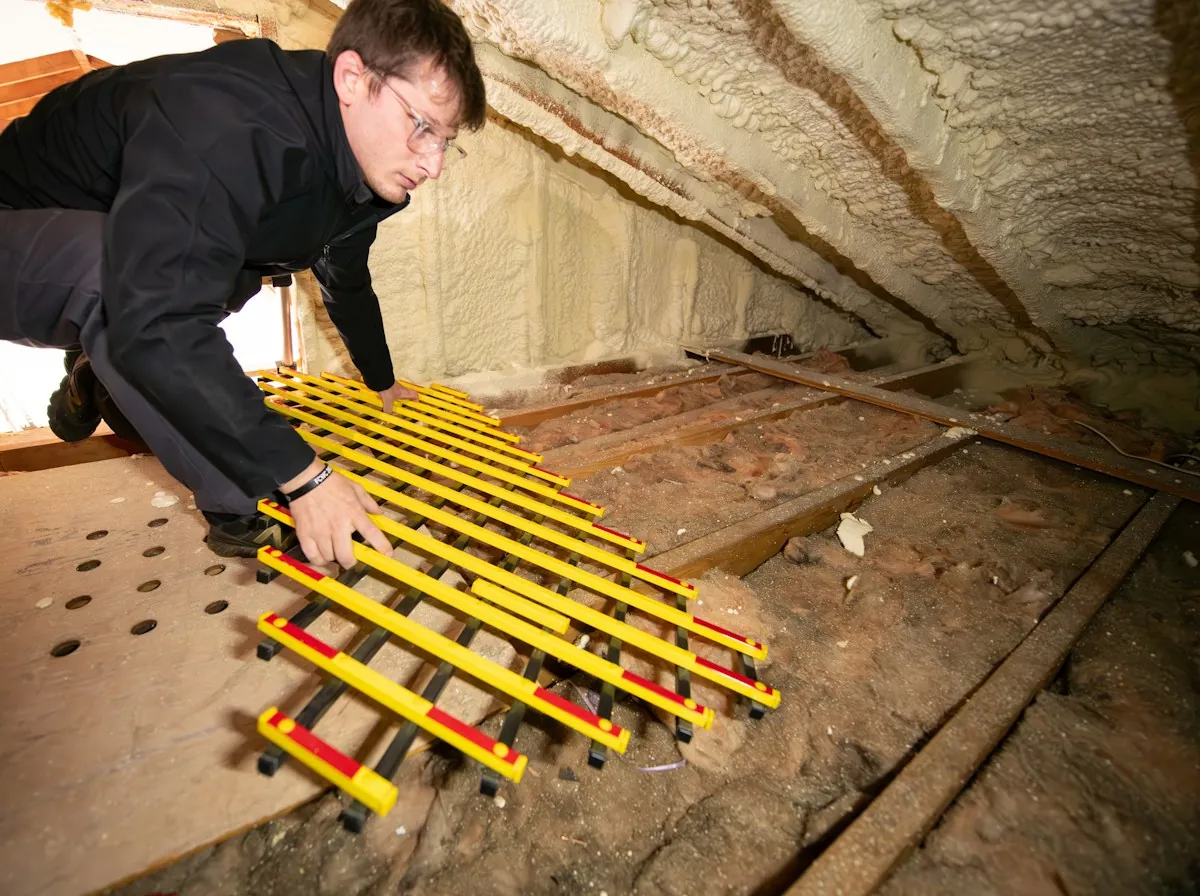
The slope, the details that actually fail, and the roof space underneath -- because the evidence of where water has been running is on the underside. You get photographs and a written opinion whether or not the work turns out to be ours.
Where the roof is yours, a written scope with the registration number on it and the three-day cancellation notice included. Where it is the association's, a report written so it can be handed straight to the management office.
The first one is the reason a share of our phone calls end with us telling somebody to ring their management office instead.
In this township that question is not pedantry, it is the difference between a necessary repair and paying twice for something your assessment already covers. A contractor who did not ask either did not know or did not want to.
Not on a website footer -- on the quote you were handed. New Jersey requires it there, and its absence tells you something before you have read a single price.
Not a stain, an entry point. Water runs along a rafter before it shows, so a quote to seal the ceiling side is a quote to do nothing slowly.
Nobody knows how much deck has softened until the covering is off. A rate per sheet is an honest answer; a lump sum is a guess that gets revisited upwards once the roof is open.
The cancellation notice is a legal requirement, not a courtesy. Including it unprompted says somebody expects the quote to survive you thinking about it overnight.
Search roofing in Monroe Township and the questions people are asking are strikingly consistent: should a 20 year old roof be replaced, is a 20 year old roof old, would you buy a house with one, does a 30 year roof really last 30 years. Five versions of the same question in one market. That happens here because this township holds the largest cluster of age-restricted communities in Middlesex County -- more than fifteen of them, over 20,000 residents aged 55 and up -- and each was built out in waves. A community that goes up in three years reaches the end of its roof life in three years, and the whole street asks at once.
For a large share of those residents the answer is that it is not their roof. Clearbrook and Concordia are condominium; Rossmoor is a co-operative. In both, the roof is generally a common element the association is obligated to maintain and replace -- not something an individual owner commissions, and under most governing documents not something an owner is permitted to commission. Paying privately for work on it can mean buying something you have already been paying for through the monthly assessment.
There is also a document. Under N.J.S.A. 45:22A-44.2 an association holding more than $25,000 of common capital assets has to commission a capital reserve study -- an analysis of the condition of the common building components it maintains and what replacing them will cost, carried out by a credentialed reserve specialist or a licensed engineer or architect. Any association that had not done one since January 2019 had to by January 2025. So the roof replacement date is very likely written down, recently, somewhere a unit owner is entitled to see it. Ask the management office before you ask us.

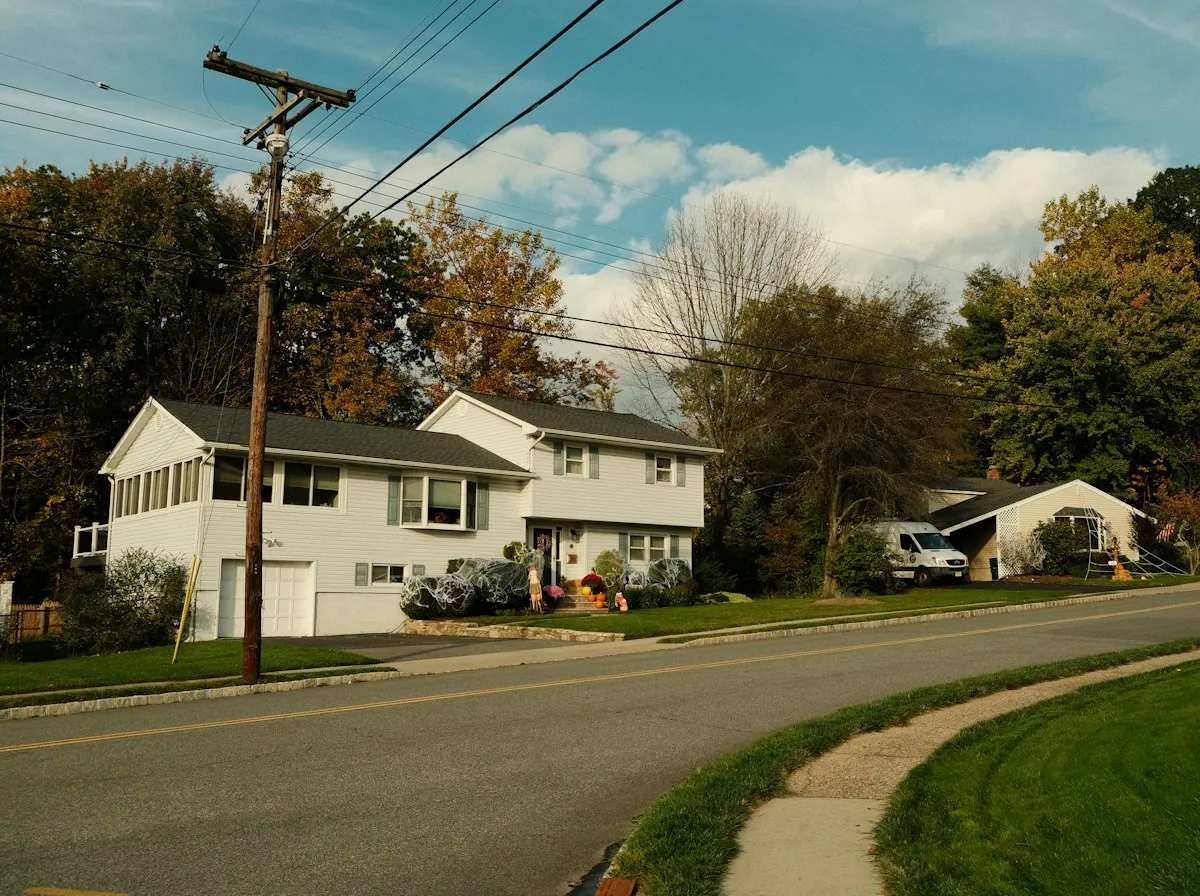
A large Middlesex County township that grew from farmland into the biggest concentration of age-restricted community housing in the county, alongside conventional subdivisions. Two quite different kinds of housing: gated age-restricted communities of attached and detached units under condominium or co-operative ownership, and ordinary single-family housing outside them.
Which of those two you are in decides everything. Outside the communities a roof is an ordinary private roof. Inside them it is generally a common element the association maintains and replaces on a reserve schedule, and an owner paying privately for work on it is usually paying twice.
The single most useful phone call in this township is to a management office, and it costs nothing.

Monroe Township community by community, plus Jamesburg and Helmetta. Who owns the roof changes at the gate, and it changes what is worth doing about a leak.
A co-operative. The corporation owns the building.
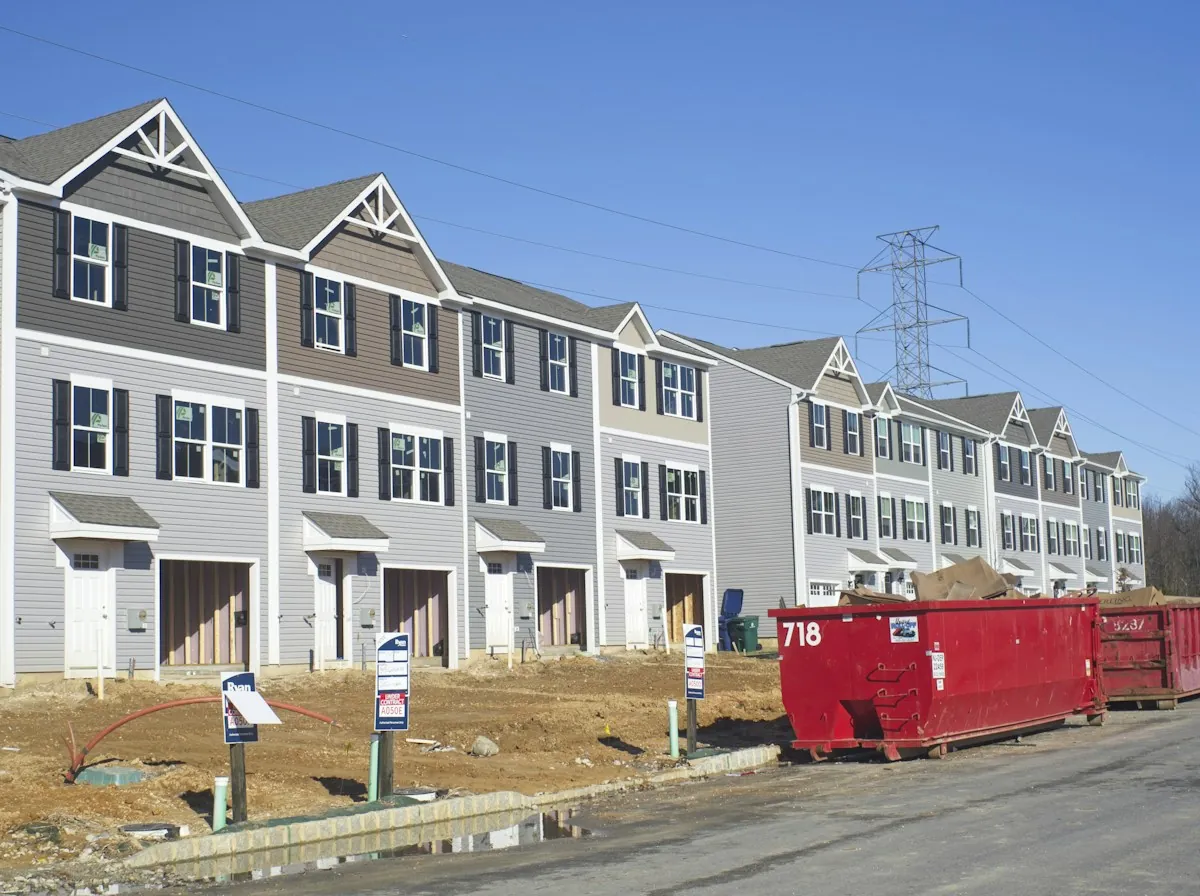
One roof plane, several homes. Scheduled by block.
The leaks are in the additions, not the main roofs.
Newer build. Details fail, not the covering's age.
Detached inside an association. Documents decide.
A separate borough. Private roofs, older stock.
Small roofs, heavy shade, damp close to the lake.
The questions worth asking, and straight answers to them.
Stop patching and survey the roof space. Water entering at a chimney or a valley can track several feet along a rafter before it shows, so a repair directly above the stain fixes nothing. Two failed patches is strong evidence the entry point was never where the work was done.
Probably not, and you should be glad about that. In a condominium or co-operative the roof is generally a common element the association maintains, so private work on it may mean paying for something your assessment already covers -- and in many governing documents it is not permitted. Ring the management office first; we will survey and write it up if that helps.
Not on age alone. A 20 year old architectural asphalt roof is middle-aged rather than finished -- the material is generally rated for 20 to 30 years in this climate, and three-tab for 15 to 20. What decides it is condition: granule loss, brittleness, how flat the covering lies, whether the deck is sound, and how well it has been drained and ventilated. A well-drained roof outlives a neglected one of the same age by years. And in an association community it is worth checking first whether the decision is even yours to make.
Most leak repairs in this market run $350 to $1,800, with genuinely minor work from about $150. The wide spread is because it covers two different jobs: putting right a failure you can see, and finding one you cannot. If a quote is at the top of that range, the thing to ask is what it includes by way of actually locating the entry point, because that is where the work is.
No. A sound roof does not leak in heavy rain, and treating it as normal is how a small entry point becomes a soft deck. What IS normal is a roof leaking only in certain conditions -- wind-driven rain from one direction, or a long downpour rather than a short one -- because that points at a specific detail failing under specific loading rather than at a hole. It is a diagnosis, not a reassurance.
We will get it dry first and tell you honestly whether the permanent repair is yours to pay for or your association's.